

Ambient bathroom lighting is one of the most effective (and overlooked) ways to transform an ordinary bathroom into a soothing retreat. Whether you want a relaxing spa feel, practical task lighting, or to raise your home’s resale value, understanding what works—and what often goes wrong—can save you a lot of time, money, and headaches.
Key Takeaways
- 81% of remodeling homeowners consider upgraded bathroom lighting a top priority, making it a central design and value feature.
- Layered ambient, task, and accent lighting is essential for both style and comfort—think spa ambiance, not just functionality.
- Common pitfalls include poor fixture choice, ignoring moisture ratings, and assuming LED upgrades alone create a relaxing mood.
- What Is Ambient Bathroom Lighting and Why Does It Matter?
- How to Design Ambient Bathroom Lighting: Step-by-Step
- Advanced Analysis and Common Pitfalls
- Conclusion
- FAQs
What Is Ambient Bathroom Lighting and Why Does It Matter?
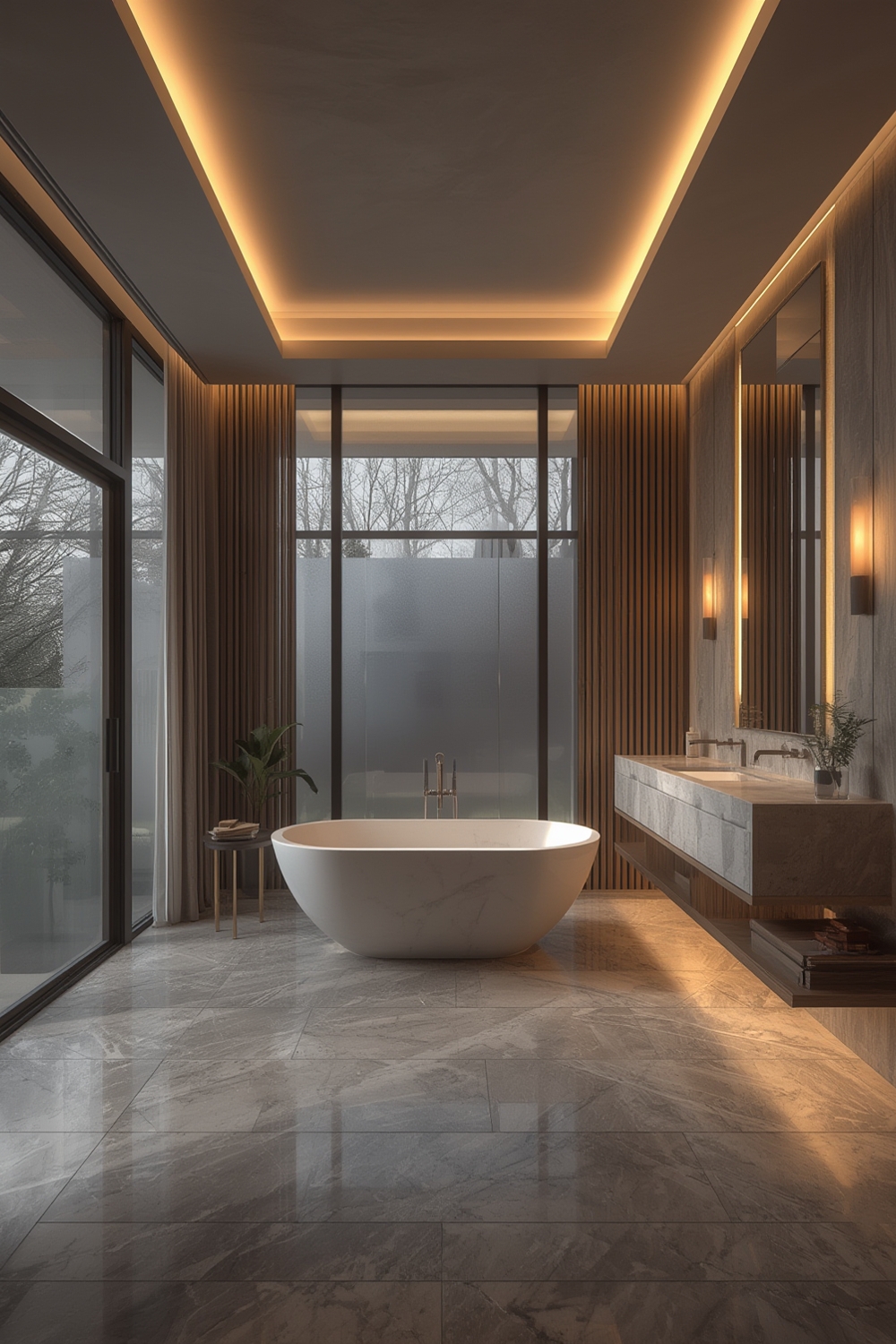
Ambient bathroom lighting refers to the soft, general illumination that fills the whole space with a comfortable, even light. Unlike harsh overhead bulbs, it’s designed to eliminate shadows and create a calm, inviting mood that complements natural daylight and practical task lights.
According to the 2024 US Houzz Bathroom Trends Study, lighting upgrades are the top project for 81% of homeowners taking on a bathroom remodel. This proves that ambient lighting isn’t just a style extra—it’s core to modern design and everyday comfort.
Beyond aesthetics, a modern ambient lighting plan can make small bathrooms feel larger, enhance safety for all ages, and support wellness routines. There’s also mounting evidence that well-lit bathrooms (with ambient, not just task lights) help increase a home’s appeal to buyers, much like indoor-outdoor living upgrades boost value elsewhere in your home.
How to Design Ambient Bathroom Lighting: Step-by-Step
Designing effective ambient bathroom lighting requires more than just buying new fixtures. Follow these steps for results that look professional, feel luxurious, and support everyday routines.
-
Assess Your Layout & Natural Light
Map out the bathroom. Note natural light sources (window, skylight) and dark corners. Identify the main areas: vanity, shower, tub, and entry. -
Choose Your Ambient Fixture Style
Select soft overhead lighting: consider flush mounts, diffused pendants, or integrated LED ceiling panels. For large bathrooms, a statement chandelier with dimming controls can set the mood, provided it meets bathroom moisture safety ratings. -
Layer With Task and Accent Lights
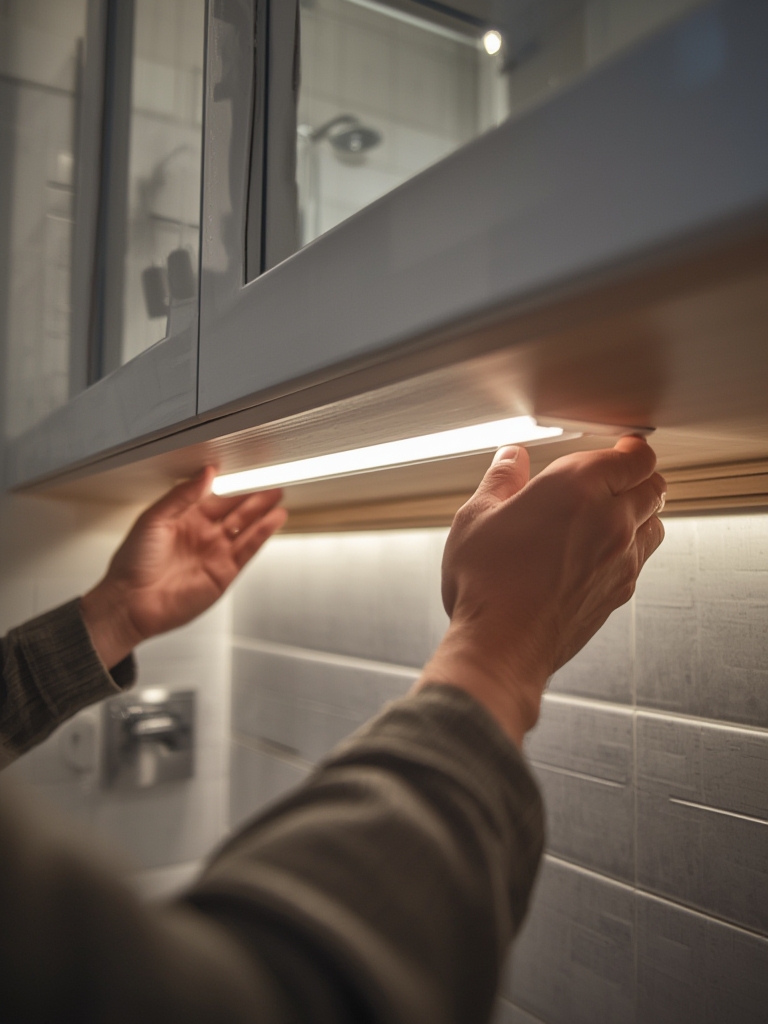
Add focused lighting at the vanity (overhead or side-mounted), in-shower recessed LED spots (suitable for wet zones), and under-cabinet or toe-kick strips for nighttime navigation. This layered approach mimics what designers use in biophilic bathroom design to boost calm and relaxation. -
Opt for Warm Color Temperatures (2700–3000K)
Avoid the harsh blue-white “daylight” bulbs. Soft white LEDs in the 2700–3000K range create a soothing glow similar to natural candlelight. For more on this, see the latest lighting trends. -
Incorporate Smart Controls
Use dimmers, scene selectors, or voice/app/sensor-based controls. This lets you easily switch from energizing morning routines to a spa-like evening wind-down. -
Plan for Energy Efficiency
Prioritize ENERGY STAR rated LED fixtures, which offer long life and lower bills. Choose moisture-rated products for showers and damp zones to stay compliant and avoid future failures. -
Professional Installation & Safety
Bathrooms require strict wiring and moisture protection. Hire a licensed electrician for installations near water, and always check local code for fixture placement and ventilation requirements.
Looking for additional ways to boost energy performance in your whole home? Check out these energy-efficient window strategies for pairing lighting improvements with window upgrades.
Advanced Analysis and Common Pitfalls
Modern bathroom lighting has advanced rapidly, but poor choices or shortcuts can undermine both aesthetics and function. Here’s what research and real-world installs show are the top issues to avoid:
| Pitfall | Impact | How To Avoid |
|---|---|---|
| Using Non-Moisture Rated Fixtures | Risk of failure, corrosion, or electrical hazards in damp zones | Always select fixtures rated for “damp” (general areas) or “wet” (showers) |
| Ignoring Layered Lighting | Shadowy, uneven illumination; poor visibility for grooming or showers | Combine ambient, task, and accent lights as standard |
| Choosing Wrong Color Temperature | Harsh, uncomfortable lighting; unflattering skin tones | Stick to 2700K–3000K for relaxation; test bulbs in place |
| Overreliance on Dimmers | Some bulbs flicker or buzz; not all LEDs work with standard dimmers | Pair certified dimmable LEDs with compatible dimmer switches |
| Underlighting for Room Size | Bathroom feels gloomy, especially at night | Calculate needed lumens based on room square footage |
| DIY Installation in Wet Areas | Code violations, electrical issues, safety hazards | Hire a pro for any electrical changes near water |
Other often-overlooked aspects include:
- Thinking only overhead lighting matters; wall and accent lighting can add depth and comfort.
- Missing out on smart features like timers or automation, which can improve both energy savings and luxury.
- Focusing on energy savings yet forgetting that quality fixtures in damp zones are essential for long-term reliability. Read more on smart home lighting integration.
Conclusion
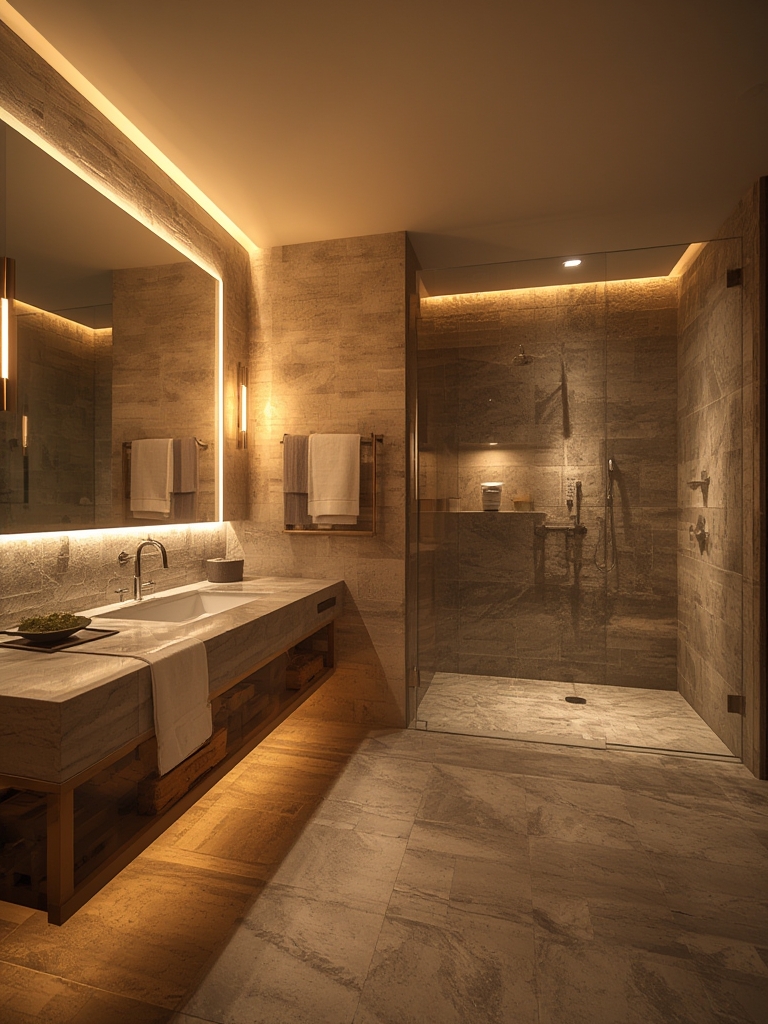
Planning ambient bathroom lighting is essential for creating comfort, safety, and modern curb appeal. By layering warm, energy-efficient fixtures with smart controls and attention to moisture safety, you set your bathroom apart—whether for enjoyment or resale value. Don’t underestimate how much ambient bathroom lighting will elevate your home and your daily life. Ready to take the next step? Start by assessing your current setup and mapping out improvements—or consult a lighting pro for a fully custom plan.
For even more bathroom design upgrades, explore our proven guides on curbless showers and spa-worthy pebble shower floors.
FAQs
What is the difference between ambient, task, and accent lighting in a bathroom?
Ambient lighting provides overall illumination. Task lighting is focused on specific areas like the vanity for activities such as shaving or makeup. Accent lighting highlights features or creates visual interest, like sconces or LED strips under cabinets.
Do I need special fixtures for wet or steamy bathrooms?
Yes, always use fixtures rated for damp or wet locations in bathrooms. Regular fixtures may corrode or fail early, especially in showers or above tubs. This is required by most building codes and essential for safety.
What’s the ideal color temperature for bathroom lighting?
The best range is 2700K to 3000K (“soft white”). This creates a relaxing, flattering glow. Avoid bright “daylight” (5000K+) bulbs, which can read as harsh and show skin in an unflattering way.
Are smart lighting controls worth it for bathrooms?
Yes, smart controls add convenience, let you change the mood with a voice or app, and boost energy efficiency by auto-timing lights. They’re especially useful for families and in guest bathrooms.
Can ambient lighting increase home resale value?
Upgraded bathroom lighting is among the top improvements for buyer appeal. While there’s no exact resale value metric for ambient lighting alone, it contributes to a brighter, modern feel that can boost a home’s attractiveness.